
February 2026

How I'm Raising My Kids Differently in the World of AI
You can't put the genie back in the bottle. AI is here to stay, and this is as dumb and minimally obtrusive as it will ever be.
Some of the most discussed concerns are the economy, the environment, and how it impacts jobs; however, my biggest concern is how it will affect my kids. The thing is, I love so much about AI. It helps with my jobs, my parenting skills, my productivity, and it’s just fascinating.
What I don’t love is the degree to which it has reduced life’s friction and the concern with where that will lead our family trees in the future.
When answers arrive instantly, struggle disappears, and struggle is where a lot of growth lives. Friction builds patience, creativity, and confidence. Kids need moments where they are bored, stuck, and forced to figure things out without a perfectly worded prompt.
When I asked some friends the question of What are you doing differently with your kids in light of where AI is now? (all parents to kids no older than 8 years old). One excitedly said, “I’m going all in and teaching them early.” There were lots of heads in agreement.
I asked some friends a simple question: What are you doing differently with your kids, in light of where AI is now? Everyone there had children under eight. most much younger than that. One parent immediately said, “I’m going all in and teaching them early,” and several others nodded like the decision felt obvious.
As I lifted my jaw from the ground, I felt a mix of confusion and despair.
Is learning AI becoming the new advantage, replacing things like youth sports or tutoring as the way parents try to get their kids ahead? Is it because any other option feels archaic? It made me wonder why we feel the need to introduce something like this into such a large portion of childhood so early.
For my younger kids, my stance is on the opposite end of the spectrum. What’s important to me as a parent is establishing a foundation that creates a confident, resilient, joyful, social, and curious child. I don’t see AI helping my kids in those areas. Am I occasionally going to ask ChatGPT to turn a picture of them into a superhero cartoon or make up a funny bedtime story for them? Sure, but after that, we’re putting it down, discussing the story, and moving on.
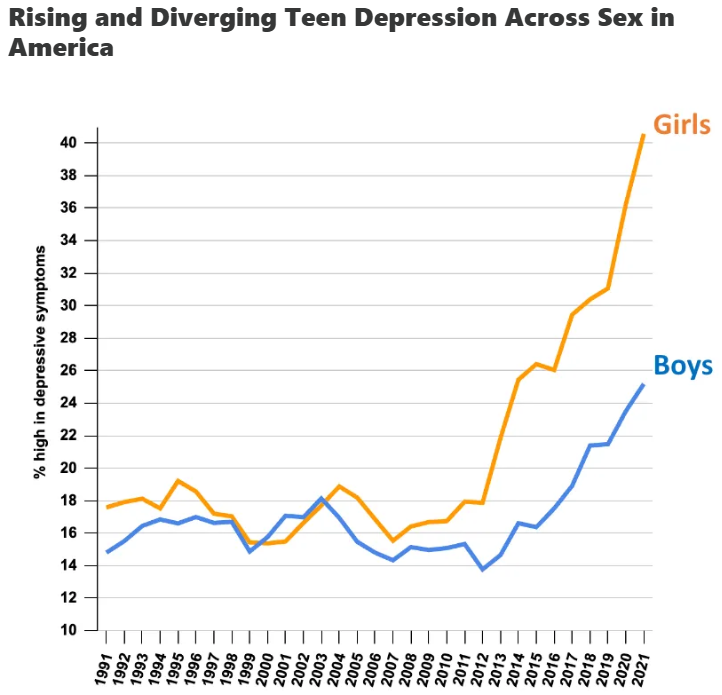
Technology is still relatively new in the grand scheme of things, yet the trend is becoming harder to overlook: higher tech exposure in childhood is linked with poorer physical and mental health markers. I’ve been sharing this research for years (scroll to the bottom graph as a stark example), which raises a simple question: how does adding more of the same solve the problem?
The reality is easy to sidestep when something is inexpensive, convenient, and intentionally designed to feel good to use. We have seen this pattern before with ultra-processed foods. Despite personal experience (weight gain, lower mood, worse health) and when the research is in our face telling us it’s bad for us, these UPFs make up the majority of our diet because they are also inexpensive, convenient, accessible, and built to taste good.
The things that feel easiest in the moment rarely show up on the list of things we’re grateful for later.
So, given that AI is here to stay, here are 10 approaches we’re using as it relates to AI and tech use:
Encourage answering questions before using a tool. When kids ask something, invite them to share what they think first and talk it through together. Being wrong and teaching each other is part of the process.
Protect boredom. Resist filling every quiet moment with a device (or an activity for that matter). Boredom often turns into drawing, building, movement, or imaginative play. Boredom is uncomfortable for a reason; let them sit in it.
Prioritize hands-on creation. Activities like Legos, crafts, writing stories, and building forts teach effort and ownership in ways generated outputs cannot. Plus, it feels better.
Minimizing environmental assistance. We have an Alexa, which we use for music and asking random questions but beyond that, our house is pretty dumb. No smart thermostats, security systems, locks, appliances, etc. This is intentional. Analog creates and normalizes some friction, reducing even simple reliances.
Think, would I look back on this as a good childhood if I were them? When adults across generations describe their fondest memories, researchers find the same ingredients: unstructured play (scraped knee situations included), time outdoors, face-to-face time with peers, and a sense of growing independence. What rarely shows up as the highlight are things like screen time, early academic pressure, or social isolation.
Keep screens as tools, not defaults. Let screens serve a clear purpose. When that purpose ends, the screen does too.
Talk about how technology can be wrong. Simple conversations about mistakes, guessing, and bias help kids understand that tools are useful but not authoritative.
Encourage better questions. Rather than rushing to answers, explore why, what else, and how do you know.
Model the behavior. Kids copy what they see. Thinking out loud, writing things down, and avoiding immediate shortcuts show that effort matters. When it’s your job to be more parent than professional, keep your kids closer to you than your phone is.
Ask, what’s the alternative? Tech is almost always available, so the better question becomes what might be lost when we default to it. Often, the trade-off is time spent on the very experiences humans evolved to rely on, like sleep, movement, time outdoors, face-to-face connection, and using your own brain to wrestle with problems. Technology can support these areas or quietly replace them.
-Brian
What are your thoughts on kids and AI integration? Am I in the minority? Leave your thoughts in the comment section below.

🎙️ The Growth Kit (Podcast)

The Anti-Anxiety Diet: 5 Science-Backed Nutrients to Reduce Anxiety & Stress
Musculoskeletal Injury: Sprain, Strain, or Break? (& What To Do About It)
Full list of episodes here. Follow The Growth Kit on Instagram. Subscribe to your favorite podcast player (Spotify, Apple). And please leave a review!
🥇 Best of the Month
“I recommend the freedom that comes from asking: Compared to what?”
—Gloria Steinem
🎧 Podcast: The illusion of moral decline by Experimental History. I initially listened to it as a podcast but found it here, with graphics, as an article.
📖 Book: No More Tears: The Dark Secrets of Johnson & Johnson by Gardiner Harris
🎁 Product: Prungo Fluxgo Red Light Therapy
❓ Question of the Month
Q: Is there any way to target stubborn fat areas?
A: If stubborn fat responded to effort alone, everyone who did 200 crunches would have a six-pack by Tuesday. Fat loss, however, is mostly systemic, meaning fat cells release energy based on hormones, energy balance, and recovery rather than the muscle you just worked. Emerging approaches such as cryolipolysis or body recomposition protocols can alter appearance in specific areas, yet large lifestyle factors like total energy balance, resistance training, protein intake, and sleep still account for the majority of fat loss outcomes.
⏱️ Brutal by Design
Tempo Torment
Purpose: Build glute/hamstring strength with slow eccentrics
Equipment: Dumbbells
Workout:
Tempo RDL (4-sec down): 4x10
Step-Through Lunge: 3x8/leg (slowly)
Feet-Elevated Superman Hold: 3x45 sec
Side-Lying Leg Raise w/ Internal Rotation: 3x15
Tip: Don’t rush the lowering phase—control = adaptation
Optional Misery: Turn final sets into drop sets
💡 Things I’ve Learned
🧠 Mind
Creatine for Depression, Not Just Muscle
In an 8-week randomized, double blind trial of 100 adults with moderate depression, adding oral creatine monohydrate to cognitive behavioral therapy led to significantly greater symptom improvement than CBT alone. PHQ-9 scores dropped an additional 5 points in the creatine group, a clinically meaningful change. Safety and dropout rates were similar between groups, suggesting creatine was well tolerated even in an under-resourced setting.
Do this: If you are in therapy for depression, ask your clinician whether low-cost creatine monohydrate could be a reasonable adjunct, not a replacement.
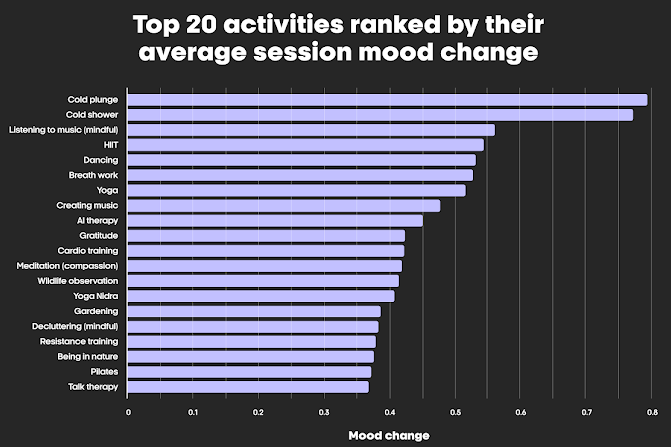
Mood Change ROI Ranked
The app, Bearmore, reviewed 3,110 sessions and found that 38 of 39 activities were linked to short-term mood improvements. Cold exposure, breathwork, gratitude, and music topped the list, with 10-19 minutes emerging as the sweet spot. Focus and repetition mattered, and morning or early-evening sessions outperformed mid-afternoon sessions.
It is worth noting that activities associated with meaningful long-term gains (talk therapy, Pilates, resistance training) produced relatively minimal mood changes, reinforcing that deeper adaptations often build gradually rather than delivering quick emotional lifts.
Do this: Go down the list and track your mood before and after each one.
Gender Traits and Mood Outcomes
A meta-analysis of 58 studies found that traditionally masculine traits were linked to lower depression rates across genders. These include being:
Independent
Active
Competitive
Decisive
Persistent
Self-confident
Comfortable taking the lead
Able to remain composed under pressure
Androgynous individuals, those high in both masculine and feminine traits, showed the lowest depression levels overall. The pattern suggests that agency and psychological range may buffer against depressive symptoms more than rigid identity.
Do this: Choose one stressor this week and approach it with intentional confidence and composure under pressure, even if you have to “act as if” at first.
💪 Body
Can Being Fit Offset Alcohol Risk?
Nearly 25,000 adults in the Norwegian HUNT Study were followed for about 17 years. Increasing alcohol intake over time was linked to higher mortality, and no drinking category clearly outperformed long-term abstainers. The bigger lever was fitness. Staying in the bottom 20% of age-adjusted fitness carried up to 65% higher mortality, even among abstainers. Those who remained fit generally had mortality rates similar to fit non-drinkers, regardless of moderate alcohol use.
Do this: Guard your fitness floor. Consistency in training appears more protective than micromanaging occasional drinks.
Hypertrophy Supplements Ranked
This review analyzed 46 ultrasound and MRI trials measuring real muscle thickness and cross-sectional area. The hierarchy for supplements for hypertrophy was clear:
Protein and EAA (hit about 0.3g per kg per meal or 2-3g leucine; most helpful if intake is under 1.6g/ kg/day)
Creatine monohydrate (3-5g daily; most effective in programs lasting at least 8-12 weeks, often adding about 3-7% more hypertrophy)
Beta hydroxy beta methylbutyrate a.k.a. HMB (3g daily; consider during high stress blocks or calorie deficits)
Omega 3s, citrulline, collagen (use for recovery, perfusion, or connective tissue support, not primary muscle growth)
Do this: Build your stack in that order and only add lower tiers if they solve a specific training problem. And talk to your doctor first.
A Natural Strategy for Managing Hypertension
This updated meta-analysis pooled 12 placebo-controlled trials including 738 patients with hypertension and found that garlic extracts lowered systolic blood pressure by about 8.1 mmHg and diastolic by about 4.3 mmHg compared to placebo. Those reductions are clinically meaningful, similar to what you might expect from a first-line medication in some patients.
Do this: If blood pressure is elevated, consider standardized garlic extract as an adjunct to diet. Don’t neglect the other important factors like weight control, sodium intake, and exercise.
🎯 Dad
Sleep Problems and Teen Injury Risk
Nearly 240,000 adolescents across 46 countries were studied to see whether sleep problems relate to injury risk, and the answer was clear. Between 16.3% and 48.3% reported poor sleep while about 44% had a medically treated injury within a year, with difficulty falling asleep showing the strongest link. Teens with sleep onset difficulties had a 58% higher risk of multiple injuries, a pattern that held across countries and was especially pronounced in girls.
Do this: Prioritize consistent bedtimes, limit late-night screens, and treat sleep routines as sacred.
Lifting During Pregnancy Isn’t Dangerous
A meta-analysis of 50 studies with over 47,000 participants found that resistance training during pregnancy reduces gestational hypertension by ~50% and gestational diabetes by ~38%. It also lowered the risk of prenatal and postpartum mood disturbances by about 50%. Rates of preterm birth, cesarean delivery, and birth complications were similar to those of non-exercisers, and macrosomia was less common in those who trained.
Do this: Short, professionally guided resistance sessions can safely support both physical and mental health during pregnancy. But of course, talk to your doctor.
A Generation-Wide Rise In Teen Depression
Data spanning the past decade show that teen depression increased across nearly all demographic categories, including rural and urban settings, different racial groups, and both higher and lower socioeconomic status. Between 2015 and 2021, depression rose among both LGB and straight teens, and the most pronounced divergence appeared between boys and girls, with girls showing sharper increases.
Do this: Build consistent routines around sleep, tech-free time, movement, exposure to nature, and face-to-face interactions, which all improve mood.
Like this newsletter? Check out previous monthly newsletters.
P.S. Help me bring health and happiness to more people--share this link with your friends and family so they can also learn awesome stuff.
